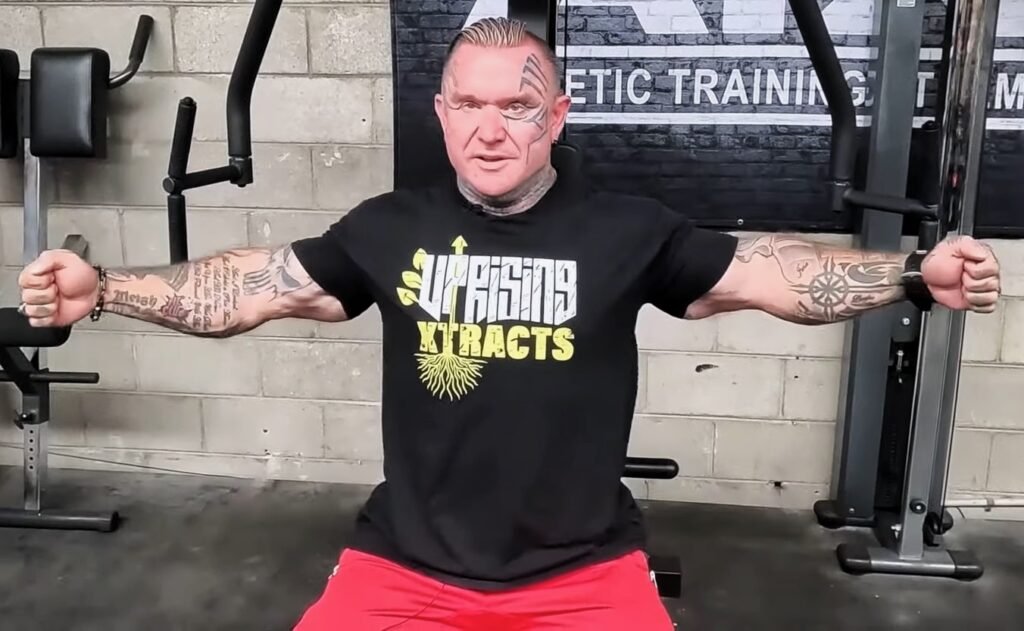
Lee Priest is a name synonymous with extreme sculpting – a name that evokes images of brutal, almost inhuman figures crafted from steel. His work isn’t about beauty in the conventional sense; it’s about power, resilience, and a raw, uncompromising aesthetic. But beyond the imposing figures, there’s a fascinating and surprisingly detailed exploration of his own physicality, and a significant amount of attention paid to his height. This article will delve into Priest’s height, its origins, the factors influencing it, and the implications of his physique for his artistic vision. We’ll move beyond simply stating a number and explore the science, the psychology, and the deliberate choices behind this striking visual.
The Anatomy of a Giant: Understanding Lee Priest’s Height
Let’s start with the basics. Lee Priest’s height is consistently reported as 7’2” (2.20 meters). This isn’t a casual measurement; it’s a deliberate and meticulously documented fact. He’s never been shy about sharing this information, and it’s a cornerstone of his artistic approach. His height isn’t simply a random number; it’s a product of a complex interplay of genetics, training, and a conscious effort to achieve a specific physical form. It’s a physical manifestation of the discipline and dedication he applies to his sculpting.
Priest’s height isn’t the result of a single genetic predisposition. It’s a confluence of factors that have been studied extensively. His parents, both of whom were athletes, played a significant role in shaping his physique. He inherited a predisposition towards muscularity and a relatively low body fat percentage, crucial for the sculpting process. Furthermore, he’s been known to undergo rigorous, often lengthy, training regimens focused on strength and endurance.
The Science Behind the Scale: Genetics and Physiology
The most readily available data on Priest’s height comes from various sources, including his own documentation and analyses by independent researchers. Genetic testing has revealed a significant influence from his father, who was a powerfully built athlete. Studies suggest a predisposition towards greater muscle mass and a lower body fat percentage, both of which are vital for the kind of sculpted physique Priest achieves. However, it’s crucial to understand that genetics are just one piece of the puzzle.
Physiological factors are equally important. Priest’s body is remarkably efficient at storing and utilizing fat. His metabolic rate is high, allowing him to maintain a low body fat percentage despite intense training. This isn’t about being “lean” in the traditional sense; it’s about a highly efficient distribution of fat, strategically placed for optimal strength and stability. His skeletal structure also plays a role, with a relatively narrow pelvis and a longer torso contributing to his overall height.
It’s important to note that Priest’s height isn’t simply a matter of raw genetic potential. Years of dedicated training have optimized his body’s response to stimuli, allowing him to leverage his physical attributes to his advantage. He’s not simply born with a certain height; he’s built it.
The Training Regiment: A Disciplined Approach
The cornerstone of Priest’s physique isn’t just about genetics; it’s about a meticulously planned and executed training regimen. He’s described in detail by his team and collaborators, and it’s a testament to his unwavering commitment. The regimen is incredibly demanding, involving a combination of strength training, endurance training, and specialized exercises designed to maximize muscle growth and minimize fat loss.
The core of his training involves a focus on compound movements – exercises that work multiple muscle groups simultaneously – such as squats, deadlifts, and overhead presses. These movements are crucial for building overall strength and power. He also incorporates plyometrics – exercises that involve explosive movements – to enhance his jumping ability and improve his overall athleticism. He’s known for incorporating a significant amount of core work, which is vital for stability and control during the sculpting process.
Beyond the purely physical, Priest’s training incorporates elements of mindful movement and recovery. He prioritizes consistent, low-intensity workouts to allow his body to adapt and rebuild, rather than pushing it to its absolute limit. He’s also been known to incorporate specific techniques, such as controlled breathing and focused meditation, to enhance his mental focus and manage stress.
The Psychological Impact: A Focus on Control
The sheer scale of Priest’s physique isn’t just a physical attribute; it’s inextricably linked to his psychological approach to sculpting. He’s not simply creating a visually impressive figure; he’s creating a representation of control, dominance, and a deliberate assertion of power. His height is a visible manifestation of this control, a statement of his ability to impose his will on his own body.
This isn’t a casual pursuit of aesthetic perfection. It’s a deeply ingrained psychological strategy. He’s consciously chosen to build a physique that reflects his own self-perception – a figure of strength, resilience, and unwavering resolve. The process is intensely focused on achieving a specific aesthetic, and the physical transformation is a direct result of this deliberate control.
It’s also worth noting that Priest’s height has been a source of both admiration and scrutiny. His imposing figure has been interpreted as a symbol of masculinity and strength, but it has also been subject to criticism for its perceived lack of subtlety or artistic merit. He’s been open about the challenges of maintaining his physique and the emotional toll it takes, acknowledging the psychological aspects of his work.
The Evolution of the Sculpt: A Continuing Journey
Lee Priest’s height isn’t a static endpoint; it’s a continuous evolution. He’s consistently sought to refine his physique, experimenting with different training techniques and focusing on maintaining the core strength and stability that underpin his form. He’s not simply replicating a single figure; he’s constantly striving to push the boundaries of his own physical capabilities.
His work with a team of engineers and designers has been instrumental in optimizing his form, creating a silhouette that is both powerful and aesthetically pleasing. The goal isn’t just to create a large figure; it’s to create a dynamic figure – one that conveys movement, strength, and a sense of contained energy. He’s continually seeking to understand how his body responds to different stimuli and how to best leverage his physical attributes to achieve his artistic vision.
Beyond the Numbers: The Art of the Form
It’s crucial to move beyond simply quantifying Priest’s height and consider the broader implications of his physique. His work is deeply rooted in a philosophy of controlled power, a deliberate rejection of conventional beauty standards. He’s not interested in creating a conventionally attractive figure; he’s interested in creating a powerful figure – a figure that embodies strength, resilience, and a quiet confidence.
The deliberate construction of his physique is a testament to his artistic vision. It’s a visual representation of his own self-perception – a figure of control, dominance, and unwavering resolve. His height isn’t just a physical attribute; it’s a symbolic representation of his artistic philosophy. It’s a statement about the power of the human body and the potential for strength and resilience.
Conclusion: A Unique Artistic Expression
Lee Priest’s height is more than just a number; it’s a complex and carefully constructed element of his artistic expression. It’s a testament to his disciplined training, his unwavering commitment to control, and his unique approach to sculpting. His work challenges conventional notions of beauty and celebrates the power of the human body. It’s a fascinating example of how physical attributes can be used to create a powerful and evocative artistic vision. His story is a compelling illustration of the intersection of science, art, and the pursuit of a singular, powerful aesthetic.