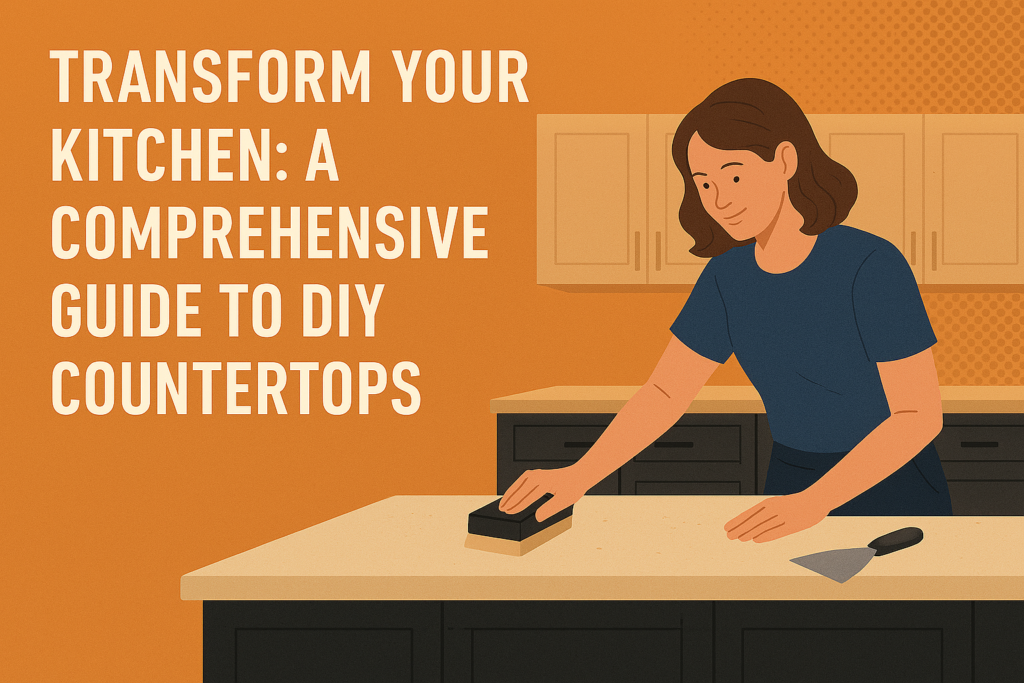
The kitchen is often called the heart of the home, a place where meals are prepared, memories are made, and families gather. A tired, worn-out countertop can significantly impact the overall feel and functionality of this crucial space. While a professional renovation can be costly, the prospect of undertaking DIY countertops offers an incredibly rewarding alternative, allowing you to personalize your space, save money, and gain immense satisfaction from a job well done. Embracing the challenge of a do-it-yourself project means taking control of your kitchen’s aesthetic and bringing your vision to life on your own terms.
Why Consider DIY Countertops?
Opting for a DIY approach to your countertops isn’t just about saving money, although that’s certainly a significant benefit. It’s about creative freedom, the ability to choose materials and finishes that truly reflect your style, and the deep satisfaction of crafting something with your own hands. Professional installation costs can easily add thousands to a renovation budget, making diy kitchen countertops a financially savvy decision for many homeowners. Beyond the monetary savings, there’s a unique sense of accomplishment in transforming your space, knowing every cut, every finish, and every detail was executed by you. This personal investment can also lead to a deeper appreciation for your home and its renewed aesthetic.
Planning Your DIY Countertop Project
Before diving into any project, thorough planning is paramount. Begin by assessing the current state of your kitchen cabinets – ensure they are sturdy, level, and capable of supporting the weight of new countertops, especially if you’re considering heavier materials. Establish a realistic budget that accounts not only for materials but also for tools you might need to purchase or rent, and potential unforeseen expenses. Crucially, honestly evaluate your skill level. Some DIY countertop options are more forgiving than others, and matching the project complexity to your experience can prevent frustration and costly mistakes. Finally, allocate a realistic timeline. Rushing can lead to errors, so give yourself ample time for preparation, execution, and finishing touches, understanding that some materials require specific curing or drying periods.
Installing Laminate Countertops: A Popular DIY Choice
Laminate has long been a go-to for homeowners seeking an affordable, versatile, and relatively straightforward option. Modern laminates offer an incredible array of patterns and textures, mimicking natural stone or wood grain, making them excellent diy kitchen countertops. To install laminate countertops, accurate measurement and templating of your space are key. Cut laminate sheets and substrate (usually particleboard or MDF) to size with precision, using a circular saw with a fine-tooth blade or a router for clean cuts. Apply contact cement or suitable adhesive to both the substrate and the laminate sheet. Careful alignment is crucial as contact cement bonds instantly. Once bonded, use a J-roller to ensure strong, bubble-free adhesion.
Trim edges with a router fitted with a flush-trim bit, then file and sand smooth. For exposed edges, apply edge banding or create a self-edge. Proper sealing of seams and edges, especially around sinks, prevents moisture infiltration and ensures longevity. While durable, laminate requires care against extreme heat or sharp objects.
Concrete Countertops DIY: For a Modern, Robust Look
For those seeking a more industrial, custom, and incredibly durable surface, concrete countertops diy is an ambitious yet highly rewarding project. Concrete offers unparalleled versatility in color, texture, and shape. Two main approaches exist: pour-in-place (forms built directly on cabinets) or pre-cast (sections cast off-site and installed). The pour-in-place method, though potentially messier, provides seamless runs. This involves building sturdy, level forms from melamine on your cabinet bases, sealed to prevent leakage. Reinforcement, like rebar or wire mesh, enhances strength. Use specialized countertop concrete mixes, designed for strength, workability, and fine finish. Pour the concrete into forms, vibrating gently to release air bubbles and ensure a dense surface.
Screed and trowel the concrete to a smooth, level finish, requiring patience. After initial set, remove forms. The concrete then undergoes a curing process, taking several weeks to reach full strength, during which it must be kept moist to prevent cracking. Following curing, grind and polish with progressively finer grits for desired smoothness. Finally, apply a high-quality food-grade sealer to protect from stains and moisture. While labor-intensive and requiring skill, custom concrete countertops make an undeniable statement.
Other DIY Countertop Options
Beyond laminate and concrete, other materials suit DIY. Butcher block (solid wood) offers warmth and beauty. It’s relatively easy to cut and install but needs regular oiling and sealing. Tile provides endless design options, but grouted lines can be a maintenance challenge. Applying epoxy resin over existing or new substrates transforms old counters, creating a seamless, high-gloss, durable finish mimicking high-end materials at lower cost. Each option presents unique challenges and rewards, suiting different skill levels and aesthetics.
Essential Tools and Tips for Success
Regardless of material, essential tools include: tape measure, level, straight edge, a good saw (circular, jigsaw, miter), and safety gear (gloves, eye protection, dust mask). For laminate, a router and trimmer are crucial; for concrete, mixing equipment, trowels, and grinders.
Tips for success:
* Measure Twice, Cut Once: Precision prevents costly mistakes.
* Don’t Rush: Take your time; rushing leads to imperfections.
* Watch Tutorials and Read Guides: Leverage available online information.
* Enlist Help: Many tasks are easier and safer with an extra pair of hands.
* Prioritize Safety: Always use PPE and understand tool operation.
Conclusion
Embarking on a journey to create diy kitchen countertops is more than just a home improvement project; it’s an investment in your skills, your home’s value, and your personal satisfaction. Whether you opt for the cost-effective versatility of laminate or the robust, custom appeal of concrete, careful planning, diligent execution, and a willingness to learn are your best assets. The transformation of your kitchen, from a dated space to a refreshed, personalized hub, will not only enhance your daily life but also fill you with pride every time you step into your newly renovated space. Embrace the challenge, trust the process, and enjoy the lasting rewards of your handiwork.